LEARN HOW TO CHOOSE THE BEST KARTING SUIT FOR MAXIMUM SAFETY – COMPARE MATERIALS, CERTIFICATIONS, FIT AND EXPERT BUYING TIPS FROM TRAXIUN
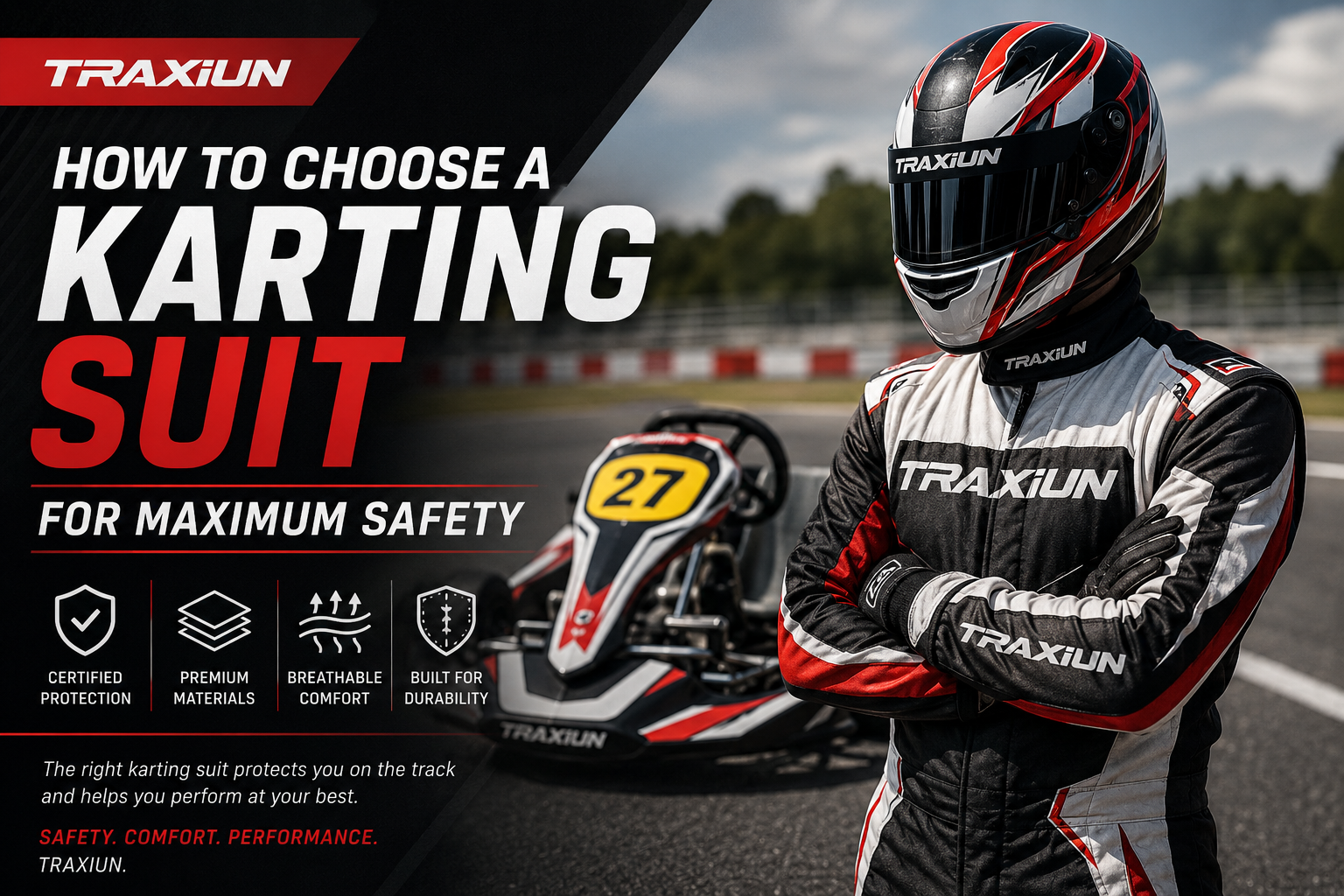
How to Choose a Karting Suit for Maximum Safety
Whether you’re stepping into a go-kart for the first time or preparing for your next championship race, choosing the right karting suit is one of the most important decisions you’ll make. A high-quality suit doesn’t just complete your racing look. It provides essential protection, improves comfort, and helps you perform with confidence every time you take to the track.
Modern go kart racing suits are designed using advanced materials that balance safety, durability, and flexibility. Understanding what professional drivers look for before buying a suit can help you make an informed decision that benefits both your safety and long-term performance.
Why a Karting Suit Is Essential
Unlike regular clothing, a professional karting suit is engineered specifically for motorsport environments. During intense racing sessions, drivers are exposed to abrasion, friction, heat, and constant body movement. A properly designed suit helps minimize these risks while allowing unrestricted movement behind the wheel.
A quality kart racing suit offers:
- Protection against abrasions and friction burns
- Improved durability during racing conditions
- Better driver comfort
- Compliance with racing regulations
- Greater confidence on the track
Whether you participate in indoor karting, outdoor competitions, or professional championships, investing in proper kart racing apparel is essential.
Understanding FIA and CIK-FIA Certifications
Before purchasing a karting suit, always verify its certification requirements.
Many professional competitions require an FIA karting suit or CIK-FIA karting suit, ensuring the garment has passed strict testing for abrasion resistance, construction quality, and durability.
If you compete in club or national championships, always check your event’s regulations before making a purchase. Buying a certified suit today can also prepare you for future racing opportunities.
Choosing the Right Materials
The material used in your go kart racing suit directly affects its comfort, durability, and overall performance.
Professional manufacturers commonly use:
Cordura Fabric
Cordura is widely recognized for its outstanding abrasion resistance and long service life. It performs exceptionally well under demanding racing conditions.
Premium Polyester Blends
Modern polyester fabrics offer excellent flexibility while remaining lightweight and breathable, making them ideal for long racing sessions.
Multi-Layer Construction
Premium karting suits often combine multiple protective layers to increase durability while maintaining comfort and freedom of movement.
Choosing high-quality materials ensures your suit performs consistently throughout multiple racing seasons.
The Importance of a Perfect Fit
Professional drivers understand that even the safest karting safety gear won’t perform correctly if it doesn’t fit properly.
A racing suit should:
- Fit comfortably without restricting movement
- Allow natural steering and pedal operation
- Keep protective layers correctly positioned
- Prevent excessive loose fabric
Many competitive drivers choose custom karting suits because they provide a tailored fit based on individual body measurements. A custom fit improves comfort, reduces fatigue, and allows greater focus during competitive races.
Ventilation Improves Performance
Kart racing can be physically demanding, particularly during warm weather or extended race weekends.
A premium karting race suit should include breathable fabrics, moisture-wicking liners, and strategically placed ventilation panels that help regulate body temperature.
Better airflow allows drivers to remain comfortable and focused throughout qualifying sessions and races.
Reinforced Protection Where It Matters
Certain areas of a racing suit experience greater wear than others.
Look for reinforced construction around:
- Shoulders
- Elbows
- Knees
- Seat area
- Side panels
These reinforced zones increase durability while providing additional protection during demanding racing conditions.
Common Mistakes When Buying a Karting Suit
Many drivers choose a suit based solely on appearance or price. Instead, focus on the features that truly matter.
Avoid these common mistakes:
- Buying the cheapest available option
- Ignoring FIA or CIK-FIA certification requirements
- Choosing the wrong size
- Overlooking ventilation and comfort
- Purchasing a suit that doesn’t match your future racing goals
Selecting the right premium karting suit today can save money and improve safety in the long run.
Caring for Your Karting Suit
Proper maintenance helps extend the life of your investment.
To keep your kart racing apparel in excellent condition:
- Wash according to the manufacturer’s instructions
- Use mild detergent only
- Air dry whenever possible
- Store in a cool, dry location
- Regularly inspect seams, zippers, and reinforced panels for wear
Replacing worn components before they fail helps maintain both safety and performance.
Why Drivers Choose Traxiun Karting Suits
At Traxiun, every custom karting suit is designed with performance, comfort, and durability in mind. We combine premium materials, reinforced construction, ergonomic design, and expert craftsmanship to create racing apparel that meets the expectations of both amateur and professional drivers.
Whether you’re looking for your first go kart racing suit or upgrading to a premium competition model, Traxiun offers custom solutions built for confidence on every lap.
Final Thoughts
Choosing the right karting suit is about much more than appearance. Certification, materials, fit, ventilation, and durability all play an important role in keeping drivers safe while maximizing performance.
By investing in a high-quality professional karting suit, you’ll enjoy greater protection, improved comfort, and the confidence to focus entirely on your driving. Whether you’re racing for fun or chasing podium finishes, the right equipment is an investment that pays dividends every time you hit the track.